


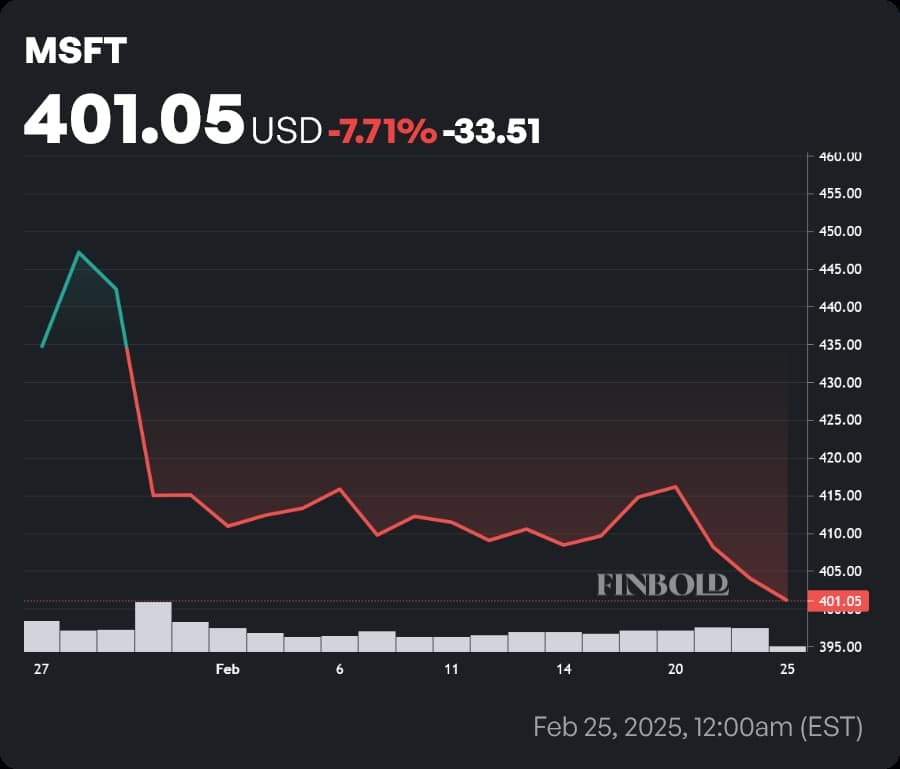
The MSFT stock chart is one of the most closely watched tools among investors, analysts, and technology enthusiasts. Microsoft Corporation (NASDAQ: MSFT) is one of the world’s largest and most influential technology companies, with business segments spanning cloud computing, software, artificial intelligence, gaming, and enterprise services.
Thank you for reading this post, don't forget to subscribe!By studying the MSFT stock chart, market participants can better understand how Microsoft’s share price has changed over time, how it reacts to news and earnings, and what trends may shape its future direction. Whether you are a beginner learning about stock charts or someone tracking the technology sector, understanding the MSFT stock chart offers valuable insight into how modern markets work.
In this article, we explore:
-
What the MSFT stock chart represents
-
How to read and interpret it
-
Key factors that influence Microsoft’s stock price
-
Common chart patterns and indicators
-
Market sentiment and trends
-
Long-term outlook for Microsoft stock
What Is the MSFT Stock Chart?
The MSFT stock chart is a visual representation of Microsoft’s share price over a specific period of time. It shows how the stock has moved:
-
Hourly
-
Daily
-
Weekly
-
Monthly
-
Yearly
The chart reflects trading activity on the NASDAQ stock exchange and updates continuously during market hours.
A typical MSFT stock chart includes:
-
Price movement (open, high, low, close)
-
Trading volume
-
Time frame (day, month, year, or longer)
By examining these elements, investors can identify trends, volatility, and key price levels.
Why the MSFT Stock Chart Matters
Microsoft is a major component of stock market indexes such as:
-
S&P 500
-
Nasdaq Composite
-
Dow Jones Industrial Average
Because of its large market capitalization, changes in Microsoft’s stock price can significantly influence overall market performance. The MSFT stock chart is important because it:
-
Shows how investors value Microsoft over time
-
Reflects reactions to earnings reports and news
-
Indicates broader technology sector trends
-
Helps identify periods of growth or decline
Tracking the MSFT stock chart helps investors understand both Microsoft’s performance and the direction of the tech industry.
How to Read the MSFT Stock Chart
Understanding the MSFT stock chart begins with recognizing its main components:
Price Line or Candlesticks
The price line shows Microsoft’s share price movement. Candlestick charts display:
-
Opening price
-
Closing price
-
Highest price
-
Lowest price
Each candlestick represents a specific time period, such as one day or one hour.
Volume Bars
Volume bars show how many shares were traded during a given time frame. High volume often indicates:
-
Strong investor interest
-
Important news events
-
Breakouts or reversals
Low volume may signal reduced market activity or uncertainty.
Time Frames
Different time frames reveal different insights:
-
Short-term charts highlight daily fluctuations
-
Long-term charts show overall trends and growth patterns
Both perspectives are useful when analyzing MSFT stock behavior.
Key Factors That Influence the MSFT Stock Chart
Several major factors drive changes in Microsoft’s stock price:
1. Earnings and Financial Performance
Quarterly earnings reports are one of the strongest influences on the MSFT stock chart. Investors analyze:
-
Revenue growth
-
Cloud computing performance
-
Profit margins
-
Guidance for future quarters
Strong earnings often lead to upward price movements, while disappointing results can cause declines.
2. Cloud Computing and AI Growth
Microsoft’s Azure cloud platform and artificial intelligence investments play a major role in shaping investor expectations. Growth in:
-
Cloud subscriptions
-
Enterprise services
-
AI tools and applications
can positively influence the MSFT stock chart over time.
3. Technology Sector Trends
Microsoft stock often moves alongside other large tech companies such as Apple, Google, and Amazon. Broader trends like:
-
Artificial intelligence development
-
Cybersecurity demand
-
Software adoption
-
Semiconductor supply
can affect the entire technology sector and Microsoft’s chart pattern.
4. Economic Conditions
Inflation, interest rates, and global economic growth impact investor behavior. Technology stocks like Microsoft can be sensitive to:
-
Central bank policy
-
Consumer spending
-
Business investment levels
Macroeconomic news often creates short-term volatility in the MSFT stock chart.
5. Company News and Product Innovation
Announcements related to:
-
New software releases
-
AI partnerships
-
Gaming and hardware products
-
Business acquisitions
can influence how investors view Microsoft’s future and move its stock price accordingly.
Common Patterns Seen in the MSFT Stock Chart
Technical analysts study chart patterns to understand price behavior. Common patterns seen in MSFT stock charts include:
Uptrends
An uptrend occurs when prices consistently make higher highs and higher lows. Microsoft has experienced long-term uptrends during periods of strong revenue growth and innovation.
Support and Resistance Levels
-
Support is a price level where the stock tends to stop falling
-
Resistance is where the stock struggles to move higher
These levels help identify potential turning points in price movement.
Consolidation Phases
Sometimes the MSFT stock chart shows sideways movement, meaning the price trades within a range. This often happens before:
-
Earnings announcements
-
Major product launches
-
Market-wide events
Technical Indicators Used With the MSFT Stock Chart
Many traders use indicators to analyze the MSFT stock chart more deeply:
Moving Averages
These smooth out price data and help identify trends. Common moving averages include:
-
50-day
-
100-day
-
200-day
When MSFT trades above key moving averages, it often signals bullish momentum.
Relative Strength Index (RSI)
RSI measures whether the stock is overbought or oversold. It helps indicate when prices may be due for a pause or reversal.
MACD (Moving Average Convergence Divergence)
MACD helps identify changes in momentum and possible trend shifts.
Market Sentiment and the MSFT Stock Chart
Market sentiment plays a large role in shaping Microsoft’s stock chart. Positive sentiment may come from:
-
Strong earnings results
-
AI breakthroughs
-
Increased cloud adoption
-
Analyst upgrades
Negative sentiment may arise from:
-
Economic uncertainty
-
Slower growth forecasts
-
Regulatory concerns
-
Competitive pressure
News headlines and analyst commentary often drive short-term movements on the chart.
Long-Term View of the MSFT Stock Chart
Over long periods, the MSFT stock chart reflects Microsoft’s transformation from a traditional software company into a global cloud and technology leader.
Long-term drivers include:
-
Growth of Microsoft Azure
-
Expansion of Office and enterprise services
-
Gaming and digital entertainment
-
Artificial intelligence integration
-
Global business adoption of cloud computing
The long-term chart shows how innovation and business strategy shape stock performance over decades.
MSFT Stock Chart vs Other Technology Stocks
Compared to many technology companies, Microsoft has:
-
Diversified revenue streams
-
Strong cash flow
-
A large enterprise customer base
-
Consistent profitability
This can make its stock chart appear more stable than smaller tech firms, although it still experiences volatility during market downturns.
Risks Reflected in the MSFT Stock Chart
Like all stocks, Microsoft faces risks that can impact its price chart:
Market Risk
Broad market declines can pull down even strong companies.
Competition
Competition from other cloud providers and software firms affects growth expectations.
Regulation
Technology regulations and data privacy laws can influence operations.
Innovation Costs
Heavy investment in AI and infrastructure can impact short-term profitability.
These risks are often reflected in sudden dips or periods of sideways movement in the stock chart.
How to Track the MSFT Stock Chart
You can track the MSFT stock chart using:
-
Financial news websites
-
Stock market apps
-
Brokerage platforms
-
Business news channels
-
Microsoft’s investor relations page
These tools provide:
-
Real-time charts
-
Historical data
-
Earnings calendars
-
News updates
-
Technical indicators
Monitoring these sources helps investors understand why the chart moves the way it does.
Educational Value of Studying the MSFT Stock Chart
Following the MSFT stock chart helps people learn:
-
How earnings affect stock prices
-
How news drives market reactions
-
How trends form over time
-
How investor sentiment changes
-
How technology companies grow
It offers a practical way to understand the relationship between business performance and financial markets.
Common Misconceptions About Stock Charts
“Charts predict the future”
Charts show past behavior, not guaranteed future outcomes.
“Only traders need charts”
Long-term investors also benefit from understanding trends and cycles.
“A rising chart means no risk”
Even strong stocks can decline during market downturns.
The Role of the MSFT Stock Chart in Portfolio Analysis
Many investors use Microsoft’s stock chart to:
-
Evaluate performance over time
-
Compare with other tech stocks
-
Assess volatility
-
Understand timing of major events
-
Monitor long-term growth
It serves as both a performance record and an educational tool.
Final Thoughts
The MSFT stock chart provides a powerful visual story of Microsoft’s journey as one of the world’s most influential technology companies. From daily price movements to long-term growth trends, the chart reflects how investors respond to earnings, innovation, and global economic conditions.
While short-term fluctuations can be driven by news and sentiment, long-term trends are shaped by Microsoft’s ability to innovate, expand cloud services, and lead in artificial intelligence and enterprise software. Understanding how to read and interpret the MSFT stock chart helps investors and market watchers gain clearer insight into both Microsoft’s performance and the broader technology sector.
For anyone interested in technology stocks or learning how markets work, studying the MSFT stock chart is an excellent way to connect business strategy with real-world financial data.

