


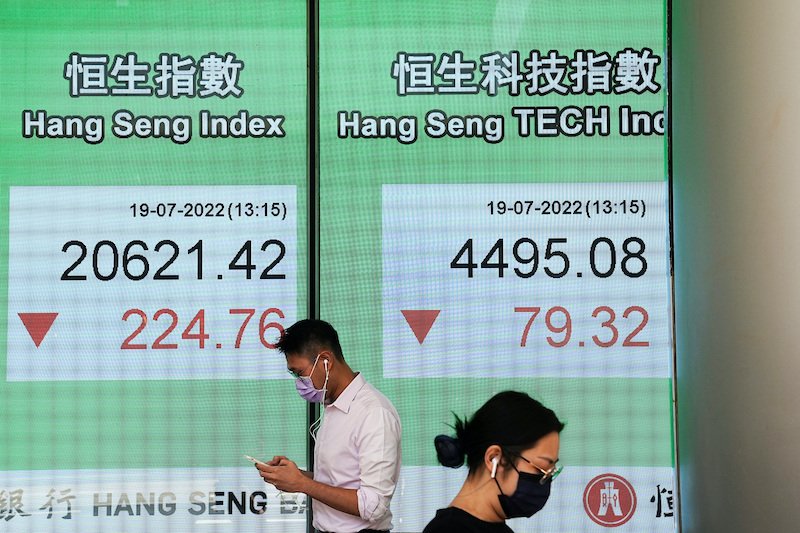
The Hang Seng Stock Market Index is one of the most important financial indicators in Asia and a key benchmark for understanding the performance of the Hong Kong stock market. It tracks the largest and most influential companies listed on the Hong Kong Stock Exchange (HKEX), offering insight into economic trends in Hong Kong and mainland China.
Thank you for reading this post, don't forget to subscribe!For investors, economists, and market watchers, the Hang Seng Index provides a snapshot of how major industries such as finance, technology, real estate, and consumer goods are performing in one of the world’s most dynamic financial hubs.
In this article, we explore:
-
What the Hang Seng Stock Market Index is
-
How it works
-
Its major components
-
Factors that influence its movement
-
Historical performance
-
Risks and opportunities
-
Why it matters in global markets
What Is the Hang Seng Stock Market Index?
The Hang Seng Stock Market Index (HSI) is a market capitalization-weighted index that represents the performance of the largest companies listed on the Hong Kong Stock Exchange.
It was launched in 1969 and is managed by Hang Seng Indexes Company Limited, a subsidiary of Hang Seng Bank. The index is widely used as a benchmark for:
-
Hong Kong’s stock market
-
Chinese corporate performance
-
Asian equity markets
The Hang Seng Index includes companies across various sectors, making it a broad indicator of economic activity in the region.
How the Hang Seng Stock Market Index Works
The Hang Seng Index tracks the price movements of selected companies based on their market capitalization and liquidity. Companies are chosen according to criteria such as:
-
Size
-
Trading volume
-
Representation of major industries
-
Market importance
The index is reviewed regularly to ensure it reflects current market conditions.
The Hang Seng Stock Market Index is divided into several sub-indexes:
-
Hang Seng Finance Index
-
Hang Seng Utilities Index
-
Hang Seng Properties Index
-
Hang Seng Commerce and Industry Index
Together, these segments provide a diversified picture of the Hong Kong economy.
Major Companies in the Hang Seng Index
The Hang Seng Stock Market Index includes many globally recognized companies, such as:
-
Tencent Holdings
-
Alibaba Group (Hong Kong–listed shares)
-
HSBC Holdings
-
China Construction Bank
-
AIA Group
-
Meituan
-
Ping An Insurance
These companies represent key industries including:
-
Banking and insurance
-
Technology and internet services
-
Real estate
-
Retail and consumer goods
-
Energy and infrastructure
Because of their size and influence, movements in these stocks can significantly impact the overall index.
Why the Hang Seng Stock Market Index Is Important
The Hang Seng Index is important for several reasons:
Economic Indicator
It reflects the health of Hong Kong’s economy and its connection to mainland China’s business environment.
Investment Benchmark
Many mutual funds, ETFs, and institutional portfolios use the Hang Seng Index as a benchmark for performance.
Global Market Signal
International investors watch the Hang Seng Index to gauge Asian market sentiment and global risk appetite.
Policy Sensitivity
The index often reacts quickly to changes in Chinese economic policy, interest rates, and global trade conditions.
Key Factors That Influence the Hang Seng Stock Market Index
Several factors drive daily and long-term movements of the Hang Seng Index:
1. Chinese Economic Performance
Because many index companies are Chinese enterprises, GDP growth, industrial production, and consumer spending in China strongly influence the index.
2. Interest Rates and Monetary Policy
Interest rate decisions by central banks, including:
-
Hong Kong Monetary Authority
-
U.S. Federal Reserve
-
People’s Bank of China
can affect investor confidence and capital flows into Hong Kong stocks.
3. Technology Sector Trends
Technology companies now represent a large portion of the index. Developments in:
-
Artificial intelligence
-
E-commerce
-
Digital payments
-
Internet regulation
can impact index performance significantly.
4. Global Market Conditions
Events such as:
-
Inflation
-
Geopolitical tensions
-
Commodity price changes
-
Currency fluctuations
often influence international investor behavior toward the Hang Seng Index.
5. Government Policy and Regulation
Changes in regulations related to:
-
Technology companies
-
Property markets
-
Financial services
-
Foreign investment
can create volatility in index movements.
Historical Performance of the Hang Seng Index
The Hang Seng Stock Market Index has experienced both strong growth and sharp declines over its history.
Periods of growth have been driven by:
-
Expansion of Chinese companies
-
Global trade growth
-
Technology sector development
-
Financial market liberalization
Periods of decline have occurred during:
-
Financial crises
-
Trade tensions
-
Regulatory crackdowns
-
Economic slowdowns
This history highlights the index’s sensitivity to both local and global factors.
Hang Seng Index vs Other Global Stock Indexes
Compared to major indexes like:
-
S&P 500 (United States)
-
FTSE 100 (United Kingdom)
-
Nikkei 225 (Japan)
the Hang Seng Index has stronger exposure to:
-
Chinese economic trends
-
Asian consumer markets
-
Technology and financial companies
It is often considered a gateway for international investors seeking access to China-related equities.
Opportunities Associated With the Hang Seng Stock Market Index
Several opportunities are linked to the Hang Seng Index:
Exposure to Chinese Growth
The index provides access to major Chinese corporations operating in banking, technology, and consumer sectors.
Sector Diversification
It includes companies from multiple industries, reducing reliance on a single sector.
Long-Term Development
As Asia’s middle class grows, demand for financial services, technology, and consumer goods may support long-term index growth.
Risks Associated With the Hang Seng Index
Despite its importance, the Hang Seng Stock Market Index carries risks:
Political and Regulatory Risk
Policy changes in Hong Kong and China can affect business operations and investor confidence.
Market Volatility
The index can experience sharp fluctuations due to global economic news or domestic policy decisions.
Currency Risk
Foreign investors may face currency exchange fluctuations when investing in Hong Kong stocks.
Sector Concentration
Heavy weighting in financial and technology sectors can increase exposure to sector-specific downturns.
How Investors Track the Hang Seng Stock Market Index
The Hang Seng Index can be tracked through:
-
Financial news websites
-
Stock market apps
-
Brokerage platforms
-
Exchange-traded funds (ETFs)
-
Business news networks
These sources provide:
-
Real-time index levels
-
Historical charts
-
Daily percentage changes
-
Market news
-
Sector performance data
The Role of ETFs and Funds
Many ETFs and mutual funds are designed to replicate the Hang Seng Index. These funds allow investors to gain broad exposure to the Hong Kong stock market without buying individual stocks.
Such funds are often used for:
-
Portfolio diversification
-
International exposure
-
Long-term investment strategies
Common Misconceptions About the Hang Seng Index
“It only represents Hong Kong companies”
Many index constituents are mainland Chinese companies listed in Hong Kong.
“It always moves with U.S. markets”
While influenced by global markets, it often reacts differently due to regional factors.
“It is only for advanced investors”
Anyone can track and learn from the index for educational purposes.
The Future of the Hang Seng Stock Market Index
The future of the Hang Seng Index will depend on:
-
China’s economic development
-
Technology innovation
-
Financial market reforms
-
Global trade relationships
-
Investor confidence
As Hong Kong continues to serve as a bridge between China and international markets, the Hang Seng Index is expected to remain a major benchmark for Asian equities.
Educational Value of Following the Hang Seng Index
Tracking the Hang Seng Stock Market Index helps individuals understand:
-
How regional economies impact stock markets
-
The relationship between politics and finance
-
Global investment flows
-
Market psychology
-
Sector performance
It provides insight into how Asia fits into the global financial system.
Final Thoughts
The Hang Seng Stock Market Index is a cornerstone of the Asian financial markets and a key indicator of economic activity in Hong Kong and mainland China. It represents some of the world’s largest banks, technology firms, and consumer companies, making it a powerful tool for understanding regional and global market trends.
While the index offers opportunities linked to growth in Asia, it also comes with risks related to regulation, geopolitics, and market volatility. Understanding how the Hang Seng Index works and what drives its performance allows investors and market observers to better interpret changes in the financial landscape.
As global markets continue to evolve, the Hang Seng Stock Market Index will remain an essential reference point for anyone interested in international finance, emerging markets, and the future of Asian economies.

